
A friend of mine bought an iPhone 17 last fall for $799. When she recently saw the same 256GB model selling for $899, she sent me a screenshot with one question: “Did my phone just appreciate?”
I laughed, but the price caught my attention too. Older phones are supposed to become the cheaper option after the next generation arrives.
Instead, Apple did something I wouldn’t normally expect. It raised the price of a year-old iPhone by $100, and the reason reaches far beyond Apple.
In this answer
- Apple Raised The Price Instead Of Cutting It
- AI Data Centers Are Competing For The Same Manufacturing Capacity
- Phone Memory Prices Were Already Surging
- AI Servers Are Starting To Use Phone-Style Memory Too
- Apple Had Already Warned That It Couldn’t Absorb The Cost Forever
- I Wouldn’t Call The Extra $100 A Memory Surcharge
- I Would Look At The Newer iPhones Before Paying $899
Apple Raised The Price Instead Of Cutting It
Apple launched the 256GB iPhone 17 at $799 in September 2025. On September 9, 2026, that starting price moved to $899 when Apple introduced its next generation of phones.
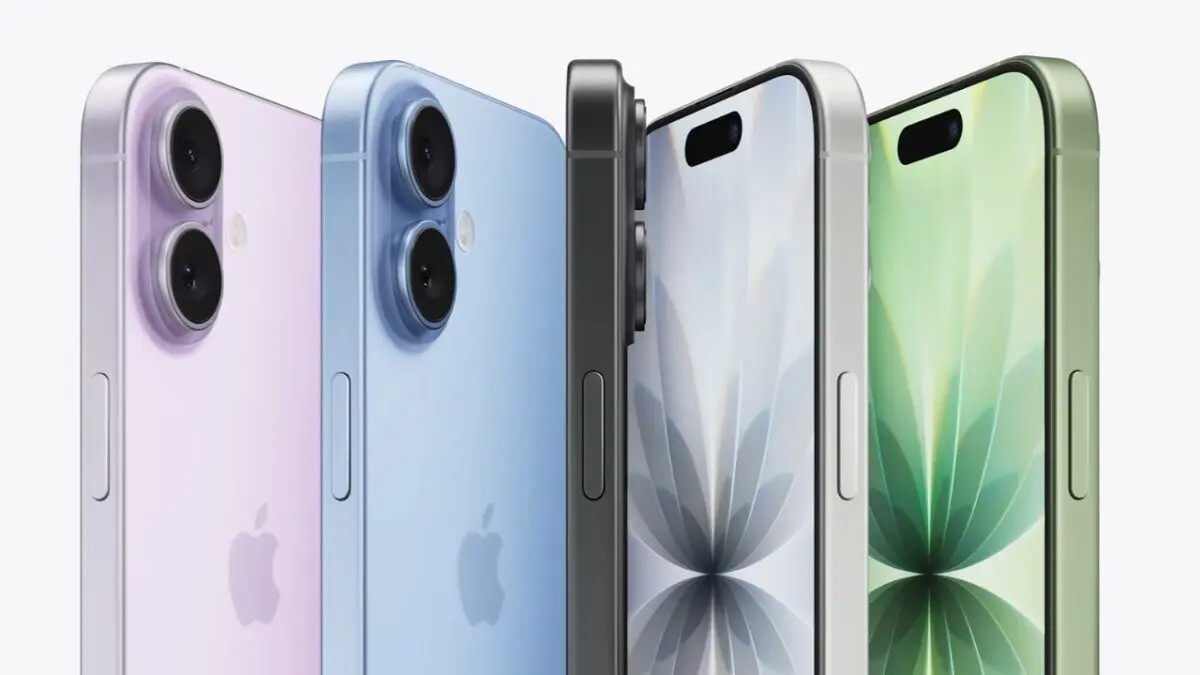
The iPhone 17 wasn’t an isolated case. Apple increased the starting prices of the iPhone 16, iPhone 17e, iPhone 17, and iPhone Air by $100, according to the prices published after Apple’s September event.
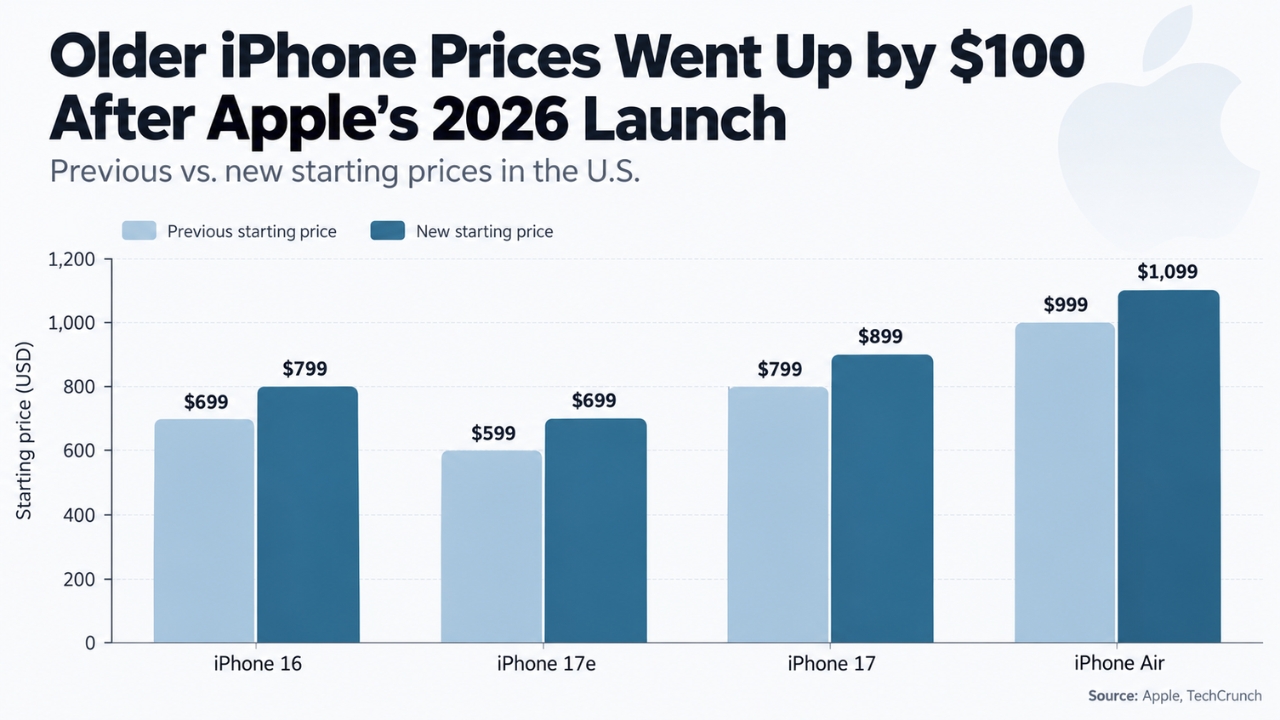
That changes the advice I usually give friends. I still like buying one generation behind when the hardware is good enough, but there’s no point assuming last year automatically means cheaper anymore.
AI Data Centers Are Competing For The Same Manufacturing Capacity
The tempting explanation is that AI companies bought all the memory. I wouldn’t put it that way because the memory inside an AI server isn’t simply the same chip Apple was waiting to install in an iPhone.
AI accelerators depend heavily on high-bandwidth memory, or HBM. Smartphones use other forms of memory, including LPDDR for working memory and NAND flash for storage.
The important connection happens at the manufacturing level, where memory companies have finite production capacity and increasingly powerful reasons to dedicate more of it to AI infrastructure.
Samsung said HBM is expected to consume nearly 30% of industry DRAM wafer capacity next year, compared with about 20% now. HBM and conventional DRAM share wafer-production resources. When one takes a larger slice, the other feels it.
Samsung says AI memory demand could squeeze the RAM supply used in phones.
– HBM could take nearly 30% of global DRAM wafer capacity in 2027, up from around 20% today
– Figure comes from Samsung EVP Kim Taewoo, speaking to Reuters
– TrendForce estimated LPDDR5X contract prices rising 78-83% quarter-on-quarter in Q2 2026
– Pressure points for future Galaxy flagships: RAM amounts, the move to LPDDR6, component costWhat that could mean for the next Galaxy flagship, on our site.
— SammyGuru (@sammygurus) October 1, 2026
Phone Memory Prices Were Already Surging
You don’t have to infer the effect from server demand alone. The numbers for phone memory became ugly earlier in 2026.
TrendForce reported in May that contract prices for LPDDR5X, the newer low-power DRAM used across high-end mobile devices, were expected to rise 78% to 83% quarter over quarter during the second quarter. It specifically warned that smartphone brands were struggling to absorb the higher costs.
TrendForce said AI servers were continuing to crowd out production capacity while smartphone manufacturers faced sharply higher memory costs.
That is the part I find more convincing than any dramatic claim that AI “stole” your iPhone RAM. Apple doesn’t need to lose a bidding war over the exact chip in your phone. A memory market tilted toward higher-margin server products can make ordinary mobile memory scarcer and more expensive all by itself.
AI Servers Are Starting To Use Phone-Style Memory Too
Here’s where the story gets more interesting. The boundary between mobile memory and data-center memory is becoming less tidy.
LPDDR was built around low power consumption, which made it a natural fit for phones and thin laptops. Now AI operators care enormously about power consumption because thousands of servers running continuously turn every watt into heat, cooling requirements, and electricity costs.
Micron is already putting LPDDR5X into server-focused SOCAMM2 modules. The company says low-power memory is finding a new role in AI data centers, particularly for inference workloads where performance per watt becomes important.
So the overlap isn’t theoretical anymore. AI infrastructure is creating demand across several parts of the memory market, not just one exotic HBM category sitting completely apart from phones.
Apple Had Already Warned That It Couldn’t Absorb The Cost Forever
The September increase didn’t arrive without warning. Back in June, Tim Cook told The Wall Street Journal that Apple planned to raise product prices as memory and storage costs climbed. Reuters reported the warning at the time, months before Apple changed the prices of its older iPhones.
View this post on Instagram
I’m usually cautious when a company points to its supply chain while explaining why customers need to pay more. Companies have margins to protect, and a component shortage doesn’t give us access to Apple’s internal pricing decisions.
In this case, though, the wider market backs up the basic argument. Memory prices rose dramatically, AI infrastructure absorbed more capacity, and smartphone manufacturers were openly facing higher component costs. Apple wasn’t describing a problem that existed only inside Apple.
I Wouldn’t Call The Extra $100 A Memory Surcharge
Here’s where I part company with some of the more dramatic explanations online. We can’t say memory added exactly $100 to the cost of an iPhone 17.
Apple doesn’t publish what it pays for every DRAM package, NAND chip, display, camera sensor, modem, or processor inside each phone. Outside estimates of an iPhone bill of materials can be useful, but they aren’t Apple invoices.
I wouldn’t take an estimate showing memory as a certain percentage of manufacturing cost and turn it into an exact explanation for the retail price.
The evidence supports a narrower conclusion. Memory became substantially more expensive, Apple warned that those increases would affect its prices, and then Apple raised the iPhone 17 by $100. Memory pressure clearly belongs in the explanation. Pretending we can account for every dollar doesn’t.
I Would Look At The Newer iPhones Before Paying $899
@dwightbaker636 Apple’s pricing just went up, and the iPhone 17E is now $100 more! 📈💸 Should you still buy the iPhone 17 or wait for the 18 Pro? Let’s discuss! 💬 #ApplePrices #iPhone17 #TechNews #SmartphonePrices #fyp ♬ original sound – DwightBaker636
If a friend asked me today whether the iPhone 17 is still the smart, cheaper option, I wouldn’t answer until I compared it with the newer lineup. At $799, buying the previous generation was easy to understand. At $899, the math changes.
I’d compare the actual features I care about, total storage, trade-in value, carrier offers, and how many years I expect to keep the phone.
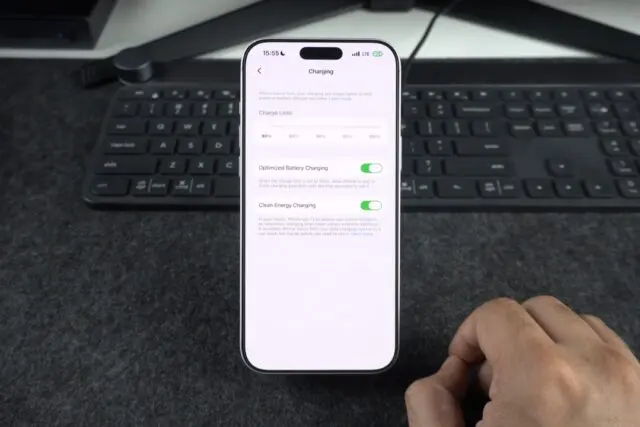
If I planned to keep the phone for several years, I’d also leave Optimized Battery Charging on to help reduce unnecessary battery wear.
I wouldn’t choose the iPhone 17 simply because the model number is older.
And if my current phone still runs well, I’d be even less eager to upgrade during a memory crunch. Keeping a good phone another year costs exactly $0 in new hardware. If that’s your plan, looking after the battery becomes more useful than chasing the newest model.